Best Peru Itineraries: Plan Your Perfect Trip Beyond Machu Picchu

Updated: Oct 2

Machu Picchu may be the reason you start planning a trip to Peru. But soon another question appears: what else would you like to discover once you are here?
The Amazon, Lake Titicaca, colonial cities, Andean landscapes, desert, wildlife... Peru offers many possibilities, and there is no single way to experience them.
Choosing the right Peru itinerary starts there: understanding what you want to experience and how much time you have to enjoy it.
How many days do you need for a Peru itinerary?
The length of a trip through Peru depends mainly on what you want to experience.
Some travelers arrive with Machu Picchu as their main goal; others want to combine history, nature, culture, the Amazon, or several regions of the country.
The time you have becomes meaningful when it is matched with the places you want to see and the pace you want for your journey. Finding that balance allows you to enjoy each experience and build a trip that feels natural from beginning to end.
That is where good planning makes a difference.
Let us look at some of the experiences you can enjoy depending on the time you have available.
What can you discover in 7 days in Peru?

A well-planned week can bring together some of the most memorable encounters of a trip to Peru, especially for travelers who want to discover Machu Picchu while gaining a deeper understanding of the Andean world around it.
The Sacred Valley adds an important dimension to that experience. Its mountains, villages, ancient agricultural terraces, and archaeological heritage offer a closer look at Inca history while introducing you to an Andean culture that is still very much alive.
Starting in this region also supports a more gradual adjustment to altitude before spending time in Cusco.
Machu Picchu is naturally one of the great moments of the journey. By the time you arrive, however, you have already begun to understand the landscape and civilization that shaped it.
Cusco adds another layer, with Inca and colonial heritage still visible in its streets, architecture, and everyday life.
In seven days, you can experience some of Peru's great icons together with the history, landscapes, and living culture of the Andes.
With 10 days, another side of Peru comes into view

There are landscapes that may not be the first ones you imagine when you think of Peru.
A city built from white volcanic stone. Vast Andean scenery. Vicuñas along the way. And above one of the country's great canyons, the chance to watch the Andean condor rise on the air currents over the valley.
Including Arequipa and the Colca Canyon opens a window onto southern Peru and reveals another expression of the Andes.
Another advantage of this journey lies in the geography of the route itself. The trip progresses toward higher elevations gradually, allowing acclimatization to become a natural part of the experience.
Arequipa and Colca bring together landscapes, nature, and ways of life that broaden the image many travelers have of the Andes.
With ten days, Peru begins to reveal a diversity that reaches far beyond its best-known places.
What if 12 days could take you into completely different worlds?

One morning you hear the sounds of the Amazon rainforest. Days later, you are surrounded by the Andes. Later still, the horizon opens across the waters of Lake Titicaca.
That contrast is one of the most fascinating parts of traveling through Peru.
In the Amazon, nature takes center stage. Tropical vegetation, wildlife watching, and the sounds of the rainforest introduce you to one of the country's great ecosystems.
In the Andes, the temperature, landscape, and history around you all change. The Inca world emerges among mountains and communities, with Machu Picchu as one of the defining moments of the journey.
Lake Titicaca opens yet another dimension: communities and traditions deeply connected to the water and the Altiplano.
The remarkable part is not simply visiting several places.
It is experiencing how much Peru can change while you are still traveling within the same country.
What about Machu Picchu and then... sailing through the Amazon?

There are many ways to experience the rainforest. This one begins when the river becomes part of the journey itself.
After discovering the Andean world and Machu Picchu, the landscape and rhythm shift in Iquitos, where a multi-day experience aboard the La Perla Amazon Cruise begins.
Navigating the Marañón River and exploring the surroundings of the Pacaya Samiria National Reserve lets you discover the Amazon from the water. Smaller boats can take you deeper into its waterways in search of pink river dolphins, monkeys, tropical birds, and other rainforest wildlife.
Here, you are not simply visiting the Amazon.
You are traveling through it.
Toward the end comes a particularly meaningful place: the meeting of the Marañón and Ucayali rivers, where the Amazon River is formed.
Within one journey, you can move from the history and landscapes of the Andes to navigating one of the most extraordinary river ecosystems on the planet.
16 days: when you begin to discover the scale of Peru
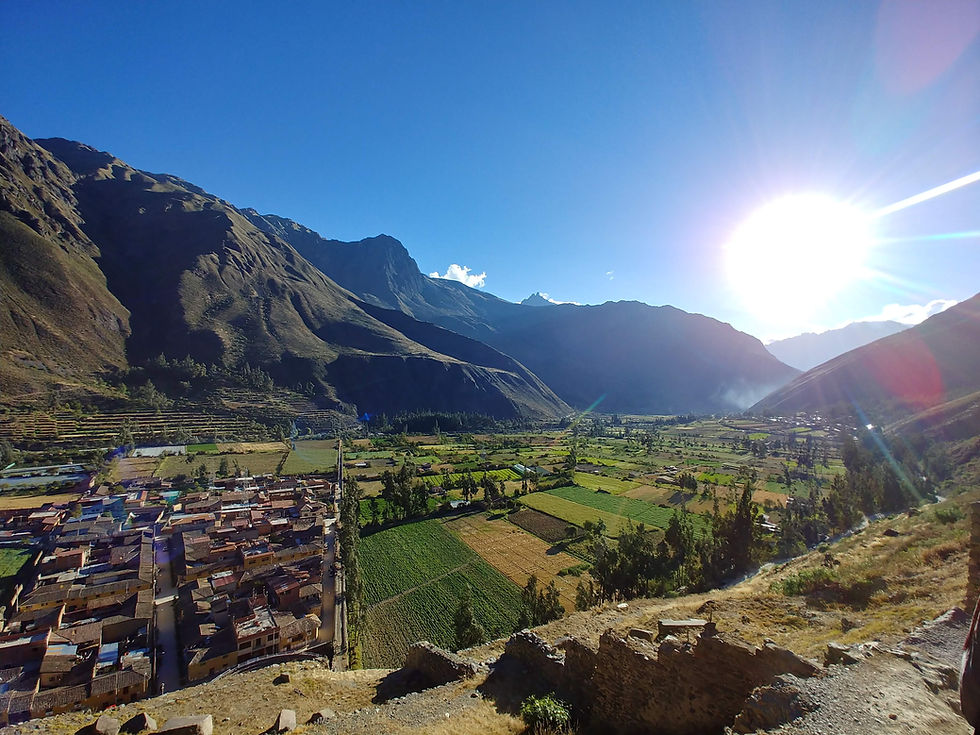
With more time comes another way to experience the country: traveling through it and watching it transform as you move.
The coast gives way to the Andes. The landscape rises and changes. Then comes the green of the Amazon, followed later by an entirely different environment between desert and Pacific coast.
That is the appeal of Peru a la Carte.
It is not about turning 16 days into a longer checklist of places. It is the opportunity to discover a country shaped by remarkably diverse geographies and cultures.
Mountains, rainforest, lakes, cities, communities, desert, and coast can belong to the same experience without any single one of them having to define Peru on its own.
Part of the fascination is discovering how much the country changes in front of you as you travel through it.
What a map cannot tell you when planning a Peru itinerary
On a map, choosing destinations can look simple. On the ground, Peru has its own realities.
Distances, travel times, and changes in altitude all matter when a journey connects different regions. The order of a trip can be just as important as the places you choose.
The time of year matters too. Conditions in the Andes are not necessarily the same as those in the Amazon or along the Pacific coast, and that can influence particular experiences.
But there is something even more important that no map can show: what you expect from the journey.
Maybe Machu Picchu has been a dream for years. Perhaps nature is your main interest. You may want to understand Andean history and culture, discover the Amazon, or experience several sides of Peru within the same journey.
A good trip begins when those expectations meet real knowledge of the territory.
Discover Peru through local experience
My story in tourism began when I was 17, working as a porter in the Andes. Over time, I studied tourism, became a guide, and had the opportunity to accompany travelers with very different stories, ages, and ways of traveling. Years later, Kusa Treks was born.
That journey taught me that discovering Peru goes far beyond visiting its most famous places.
Every traveler arrives with different expectations, and every region has its own way of being understood and experienced.
That is also how we understand Kusa Treks.
Our guides, drivers, and local collaborators know the places we travel through because they are part of this land and its communities. Their knowledge and experience are also part of the way our travelers discover Peru.
We want the people who travel with us not only to see Peru, but to understand it and feel a genuine connection with the people and places they encounter along the way.
Planning Your Peru Journey: Frequently Asked Questions
Does Kusa Treks organize small-group or private Peru tours?
Yes. Kusa Treks works with private experiences and small groups, allowing for more personalized attention and a travel pace that better suits each journey. This approach also creates a closer connection with the guides and a more personal way to experience the destinations included in the itinerary.
Why travel with a local Peruvian tour operator?
Traveling with a local operator means planning your journey with people who know the destination through everyday experience, not only through an itinerary. For Kusa Treks, that knowledge includes understanding the routes, travel times, logistics, and the particular characteristics of Peru’s different regions. It also means having a local team you can rely on before and during your journey.
How does Kusa Treks support responsible tourism in Peru?
For Kusa Treks, responsible tourism begins with the way each journey is operated. The company works with local staff, seeks to support local suppliers, and promotes experiences that respect the communities and places visited. As a Peruvian operator, Kusa Treks believes tourism should not only provide a meaningful experience for travelers, but also create a positive impact in the destinations that make each journey possible.
So, which Peru would you like to discover?
You may have arrived here thinking mainly about Machu Picchu, and now you may also be imagining the Amazon, the Colca Canyon, Lake Titicaca, or a journey connecting several regions of the country.
If you are still exploring the possibilities, our journeys can help you find the experience that best matches the way you want to discover Peru.
And if you already know which trip feels right for you, tell us about your plans. We would love to hear what you have in mind and help you take the next step toward your Peru experience.


Comments